

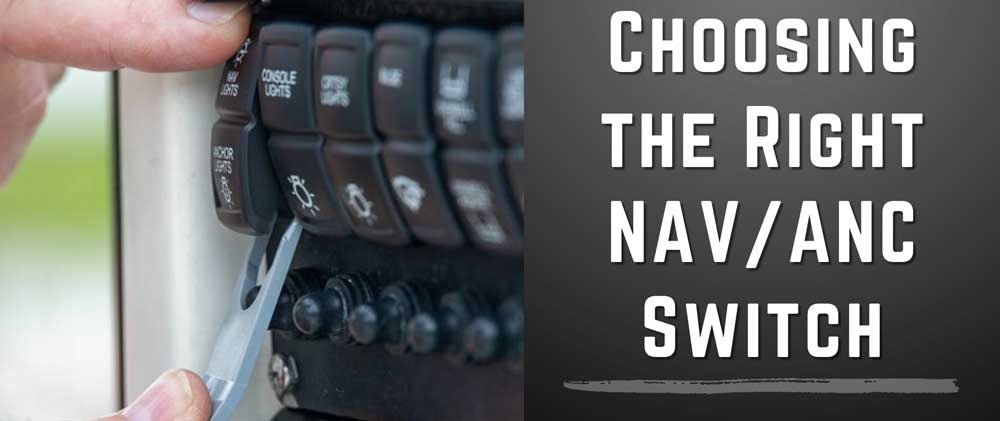
Choosing the Right ON-OFF-ON Switch for NAV-ANC
Rocker Switch Selection Guide
Choose a NAV/ANC rocker switch by matching its terminal count and lamp behavior to your existing wiring or panel design. The rocker face and lamp color can look alike; the wiring arrangement is what determines whether the switch is the correct fit.
Quick answer: choose your switch
All three options are ON-OFF-ON DPDT switch bodies. The switching function is similar; their lamp circuits are not.
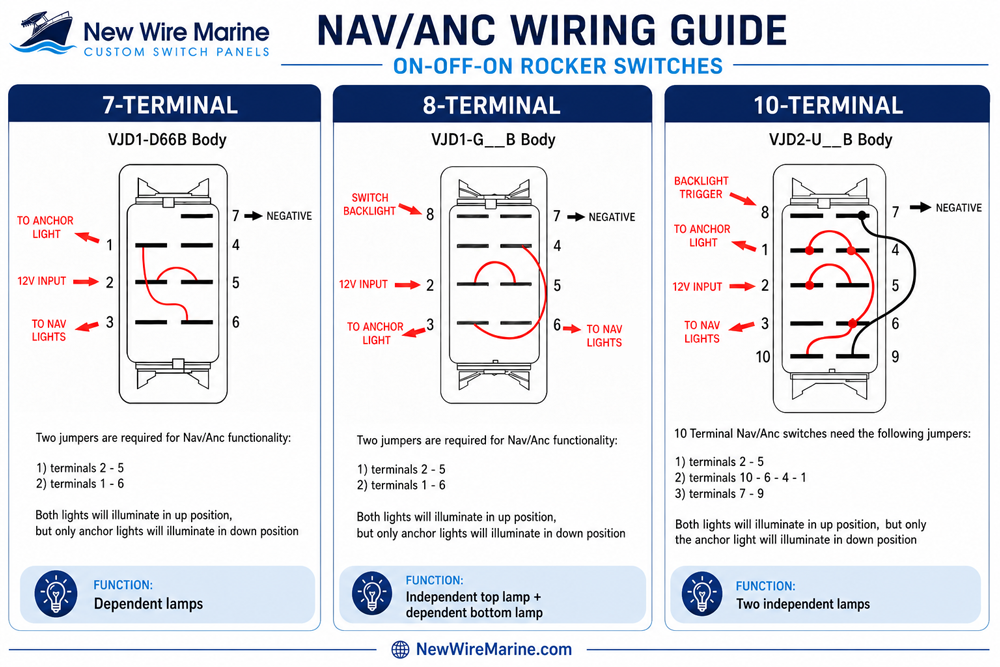
7 terminals
Choose for a conventional dependent-lamp replacement when separate panel backlighting is not required.
8 terminals
Choose when the top lamp needs separate panel backlighting and the lower lamp remains a circuit-status lamp.
10 terminals
Choose only when both lamps require independent wiring or you are matching an existing 10-terminal installation.
Compare 7-, 8-, and 10-terminal NAV/ANC switches
| Terminal count | Lamp behavior | Select it when | Do not select it just because |
|---|---|---|---|
| 7 terminals | Two dependent lamps | You are matching a simple existing 7-terminal installation. | The rocker or lamp color looks similar. |
| 8 terminals | Independent top lamp; dependent bottom lamp | You need separate panel backlighting plus switched-circuit status indication. | You only want a different illumination color. |
| 10 terminals | Two independent lamps | Both lamp circuits need independent control, or the existing switch is 10-terminal. | More terminals seem like an automatic upgrade. |
How a NAV/ANC switch works
A NAV/ANC rocker switch controls two lighting states: one maintained ON position powers navigation and anchor lights together, the center position turns them off, and the other maintained ON position powers the anchor light only.
DPDT means Double Pole, Double Throw. The rocker has two separate switching paths and two maintained ON positions. The distinction between 7, 8, and 10 terminals is primarily how the switch body’s two lamps are connected.
Count the terminals on the existing switch and compare the wiring diagram for the exact replacement body. Terminal count helps narrow the choice, but it does not replace the model-specific diagram.
7-terminal switches: two dependent lamps

A 7-terminal body has two dependent lamps. The lamps are connected to the switch circuit rather than a separate panel-lighting circuit, making this the straightforward option for a conventional NAV/ANC replacement.
Best for: Matching an existing 7-terminal NAV/ANC switch when the panel does not need a separately powered backlight lamp.
The VJD1-D66B is the warm-white incandescent version. The VJD1-DXXB uses blue LEDs but has the same seven-terminal dependent-lamp arrangement.
Available 7-terminal switch bodies
Already know you need a 7-terminal body? View the NAV/ANC wiring guide.
8-terminal switches: independent top lamp, dependent bottom lamp

An 8-terminal switch separates two jobs: the top lamp is independently powered through terminals 8 and 7, while the bottom lamp is dependent on the switched circuit. This allows the top lamp to join the panel-backlight circuit while the lower lamp provides switched-circuit status indication.
Best for: A NAV/ANC switch on a separately backlit panel, especially when the label should illuminate with the rest of the dash.
Select the lamp color only after confirming the eight-terminal independent-top/dependent-bottom arrangement matches the wiring. Color does not change the switch body’s lamp behavior.
Available 8-terminal switch bodies
10-terminal switches: two independently powered lamps

A 10-terminal switch has six terminals for the DPDT switching contacts and four terminals for two independent lamps. Each lamp can be connected to its own lighting or indication circuit rather than automatically following the switched load.
Best for: Matching an existing 10-terminal switch or an application where both lamps genuinely need separate power and control.
A 10-terminal body can be used for NAV/ANC, but it requires deliberate lamp wiring because neither lamp automatically serves as the dependent ON-status lamp.
Available 10-terminal switch bodies
- Warm white incandescentVJD2-U66B
- Blue LEDVJD2-UXXB
- Red LEDVJD2-UCCB
- Cool white LEDVJD2-UWWB
- Green LEDVJD2-UEEB
- Amber LEDVJD2-UKKB
- Bright red LEDVJD2-UQQB
Need terminal-by-terminal installation instructions? Read the 10-terminal wiring guide.
Wiring videos and guides
This article helps select the correct switch body. Use the dedicated How To resources for terminal-by-terminal wiring and diagrams.
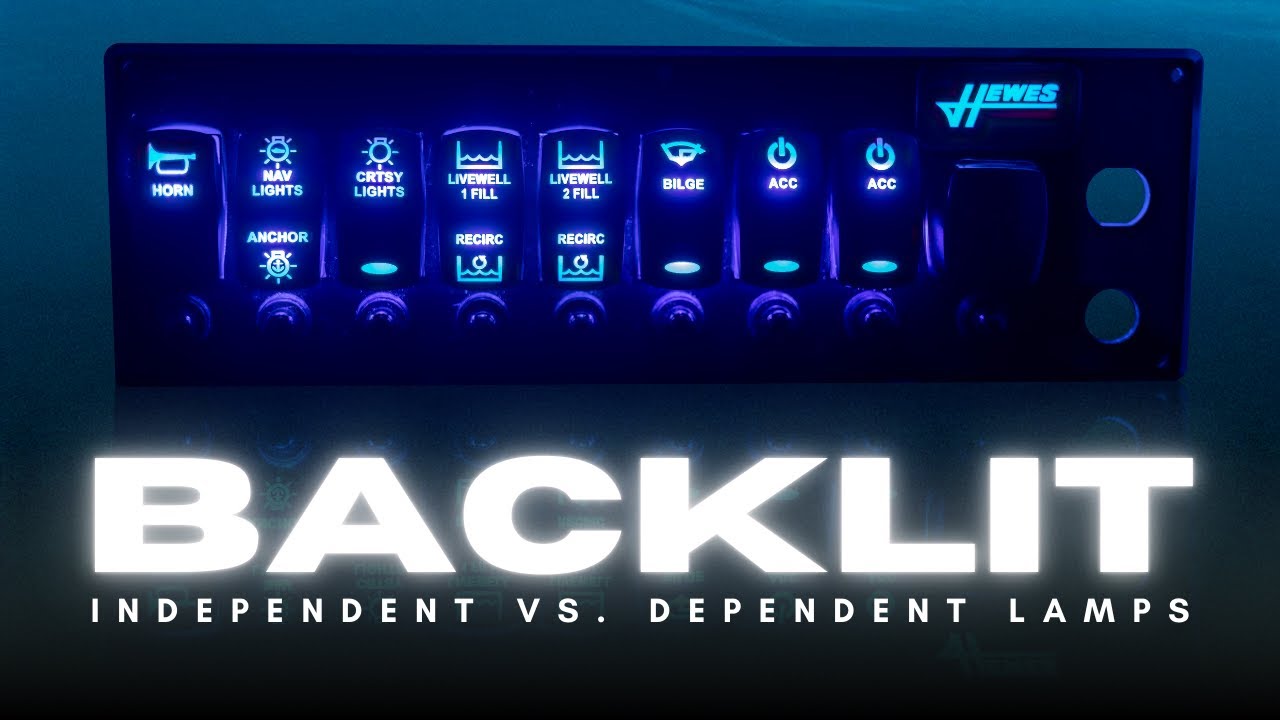
Dependent vs. independent lamps
See how lamp behavior differs between switch bodies before deciding which configuration your panel needs. Watch the video →
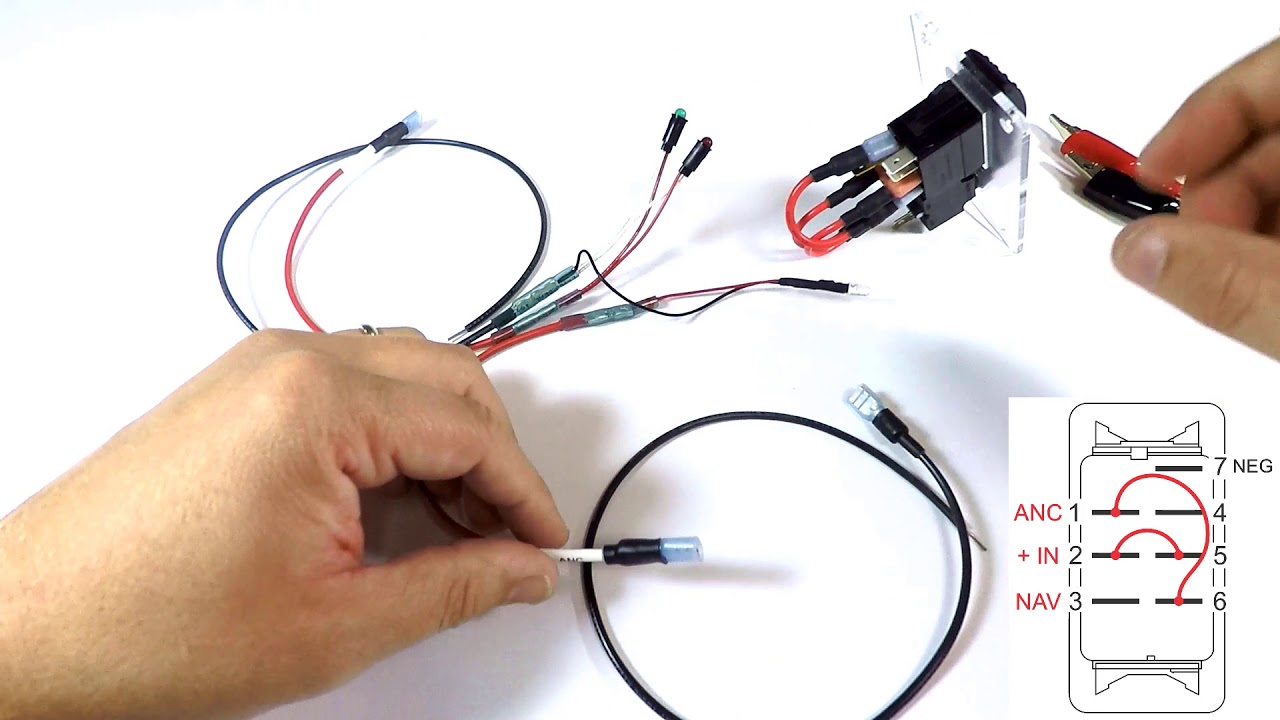
How to wire a NAV/ANC rocker switch
Use the dedicated 7-terminal guide for NAV/ANC terminal connections, jumpers, and diagrams. View the wiring guide →

How to wire a 10-terminal rocker switch
Pam walks through the VJD2 10-terminal ON-OFF-ON rocker switch and common NAV/ANC applications. Watch the video →
NAV/ANC rocker-switch FAQ
Can I replace a 7-terminal NAV/ANC switch with an 8-terminal switch?
Not by terminal count alone. An 8-terminal switch adds an independently powered top lamp, so compare the existing terminal layout and lamp wiring with the diagram for the exact replacement body.
Why does a backlit NAV/ANC panel commonly use an 8-terminal switch?
The independent top lamp can be connected to the panel-backlight circuit, while the dependent bottom lamp remains connected to the switched circuit for status indication.
Does lamp color change the wiring configuration?
No. First match the terminal count and lamp behavior required by the wiring. Then select an available lamp color that matches the rest of the panel.
What should I verify before ordering?
Confirm the exact switch-body part number, terminal count, lamp behavior, and wiring diagram. Switch bodies require a compatible rocker cover.
The bottom line
Choose the terminal count that matches the lamp behavior and wiring your boat requires. A 7-terminal switch is the straightforward dependent-lamp option. An 8-terminal switch adds an independently powered top lamp for separately backlit panels. A 10-terminal switch provides two independently powered lamps when the application truly calls for that control.
Share This Story, Choose Your Platform!
About the Author: NWMJan










Leave A Comment
You must be logged in to post a comment.